Love, Loss, and the Familiar Wound
Abraham of London
The Core Thesis
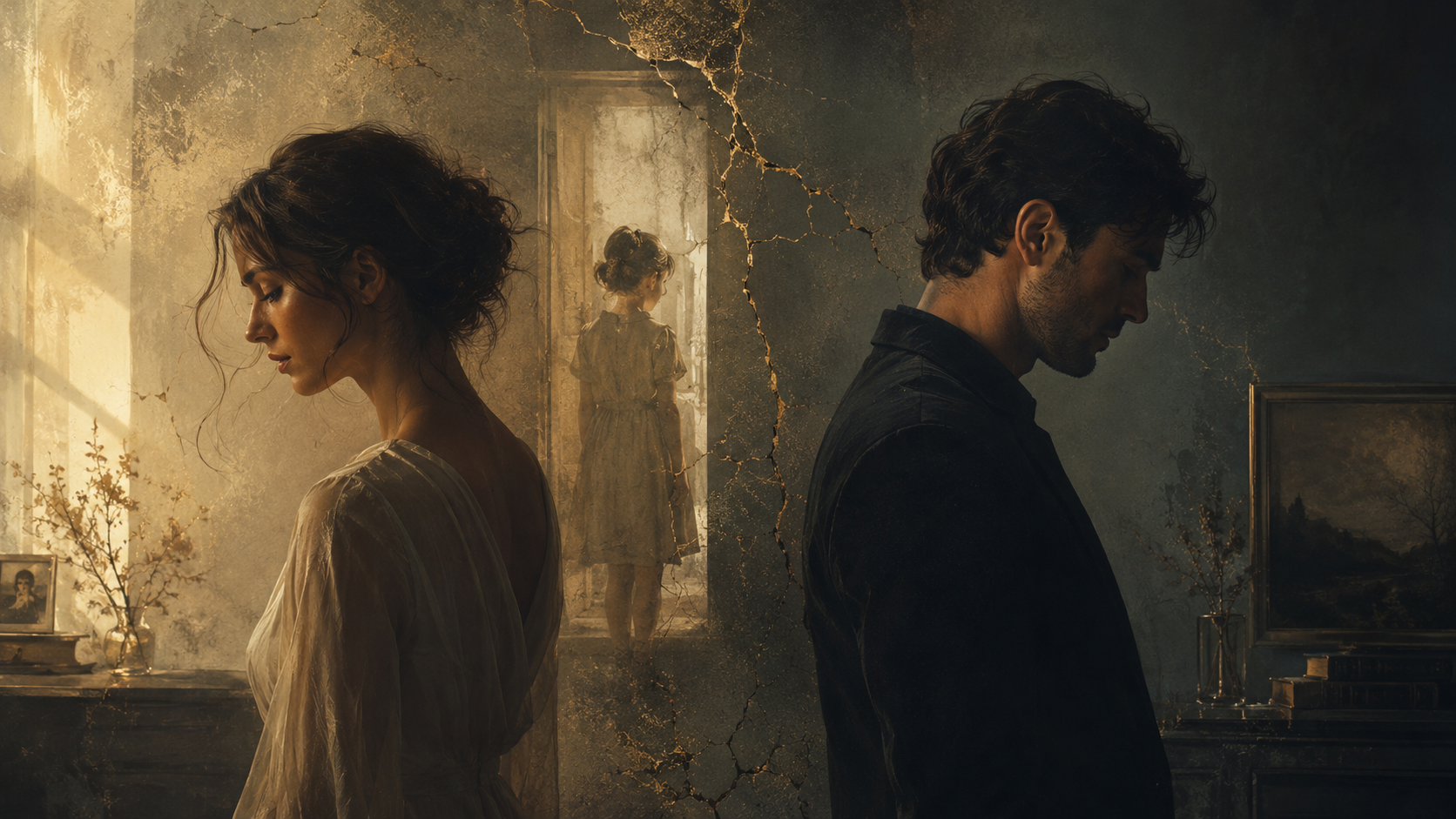
Many people do not simply choose partners. They repeat emotional climates. The wrong person can feel right because they resemble the conditions under which our earliest longings, fears, and survival strategies were formed. But explanation is not abdication. To understand why we chose badly is not to escape responsibility. It is to finally begin choosing with our eyes open.
Love, Loss, and the Familiar Wound
Sometimes the wrong person feels like home.
That is the trouble.
Not because they are safe. Not because they are wise. Not because they are capable of love in the covenantal sense. Not because their presence strengthens what is best in you. Not because your future children would thank you for the atmosphere they are likely to create.
They feel like home because home, for many people, was not peace.
Home was pursuit. Home was silence. Home was tension in the hallway. Home was the careful reading of facial expressions. Home was the fear of asking for too much. Home was the art of staying useful so affection would not be withdrawn. Home was love mixed with criticism, tenderness interrupted by rage, attention made scarce enough to become addictive.
Then adulthood arrives.
The person changes.
The pattern does not.
A face appears. A voice. A presence. A confidence. A wound wrapped in charm. A need that gives your emptiness a job. A distance that awakens the old chase. A volatility that feels alive because your nervous system learned long ago to associate intensity with significance.
And you say the fatal sentence:
“There is something about them.”
Yes.
There is.
But the question is whether that something is love, or recognition.
Familiarity is not destiny. Sometimes it is only the wound remembering its first address.
This is one of the hardest truths about love: attraction is not always innocent. Chemistry is not always revelation. Desire does not always tell the truth. Sometimes what we call “connection” is the body recognising a climate it already knows how to survive.
That does not make us foolish. It makes us human.
But it does mean we must become very honest.
Because love is too serious to be left to appetite, loneliness, spiritualised impulse, unresolved childhood, or the theatrical language of romance. And marriage is far too consequential to be built on the mere fact that someone makes your wounds feel awake.
This essay is not against love.
It is against blind choosing.
It is for the person who has loved and lost, not so they can become hard, but so they can become wise. It is for the divorced, the betrayed, the abandoned, the disillusioned, the ashamed, the ones who ask in private, “How did I choose that?” It is for those who now realise that the story they called romance may also have been the repetition of an older script.
It is not here to condemn you.
It is here to tell the truth.
The First Education in Love
No one begins love as a blank page.
Before romance, there was attachment.
Before desire, there was dependence.
Before you knew what a partner was, you knew what it felt like to need someone who had power over your safety.
The earliest caregivers do more than keep a child alive. They teach the child, without words, what closeness means. They teach whether comfort comes. Whether anger destroys connection. Whether truth is safe. Whether need is welcomed, tolerated, punished, mocked, or ignored. Whether authority protects or humiliates. Whether love is steady or must be earned through performance.
A child learns these lessons before they can assess them.
That is the cruelty and mercy of childhood. The child is not yet a philosopher. The child cannot say, “This is not a healthy model of affection.” The child adapts. The child survives. The child becomes excellent at reading the room.
Then the child grows older and calls the adaptation personality.
“I am independent.”
“I do not need much.”
“I like a challenge.”
“I am just intense.”
“I get bored with calm people.”
“I cannot be with someone too available.”
“I do not trust easily.”
“I always end up with complicated people.”
These sentences may sound like preferences. Often, they are histories wearing casual clothes.
The Hidden Curriculum
The home does not only teach children what love is. It teaches them what love feels like. Later, they may reject the idea of the home they came from while still pursuing its emotional climate.
This is why early care matters so much.
A child who receives tenderness without fear is not guaranteed a good marriage later, but they are given better inner materials. A child who learns that apology is possible, that conflict can be repaired, that adults can be strong without being cruel, that authority can be firm without being unsafe, carries a different map into adult love.
A child who learns otherwise may still become wise, loving, faithful, and whole. Grace is real. Repair is possible. But they may have to unlearn what the body learned before language.
This is where many people underestimate the matter. They assume adult love is a fresh beginning. Sometimes it is. But often adult love is where old lessons come asking to be completed.
The relationship becomes a classroom.
Or a battlefield.
Often both.
The Opposite-Gender Template
We must speak plainly here.
A boy learns something about women from his mother or mother-figure long before he understands romance.
A girl learns something about men from her father or father-figure long before she understands marriage.
This is not the whole story of attraction. Human development is complex. Same-sex parental influence matters. Siblings matter. Culture matters. Faith matters. Temperament matters. Social class, wound, beauty, shame, opportunity, moral formation — all of it matters.
But the early opposite-gender template often becomes deeply influential.
The daughter watches whether the man in the house protects or frightens. Whether he stays or disappears. Whether his word can be trusted. Whether strength is gentle or threatening. Whether masculinity means covering, absence, control, service, contempt, sacrifice, or hunger.
The son watches whether the woman in the house nurtures or manipulates. Whether tenderness is safe or conditional. Whether femininity is warmth, volatility, contempt, seduction, peace, devouring need, wisdom, or chaos.
These impressions are not always conscious.
That is precisely why they matter.
Later, attraction can form around what the person has learned to expect. A woman whose father was emotionally absent may find herself drawn to men whose attention feels difficult to secure. The difficulty itself becomes the drug. A man whose mother was intrusive, critical, or emotionally consuming may become drawn to women who require endless management, because love feels familiar when it comes with pressure.
This does not mean daughters marry their fathers or sons marry their mothers in a simplistic way. Life is not that crude. But many people marry an emotional arrangement they already know.
Sometimes they marry against the pattern.
Sometimes they marry the pattern.
Sometimes they marry someone who lets them keep performing the role they learned in childhood.
The rescuer finds the wounded.
The neglected finds the unavailable.
The controlled finds the controlling.
The ashamed finds the critic.
The chaos-trained finds the volatile.
The abandoned finds the person they must keep proving themselves to.
The child who had to be impressive becomes the adult who mistakes admiration for intimacy.
The child who had to be useful becomes the adult who mistakes being needed for being loved.
Some people do not fall in love. They fall into role.
This is why discernment must go deeper than chemistry.
Chemistry may tell you that something is alive. It does not tell you whether that thing is healthy.
A fire is alive.
So is infection.
The Paradox of the Difficult Carer
There is a strange paradox in love: people often choose the person who makes love difficult, then experience the difficulty as proof of depth.
The person is distant, so winning their attention feels meaningful.
The person is critical, so earning their approval feels like progress.
The person is unstable, so moments of peace feel intoxicating.
The person is emotionally withholding, so small gestures become feasts.
The person is demanding, so sacrifice feels like devotion.
The person wounds, then apologises beautifully, and the apology becomes more addictive than steadiness would have been.
This is the difficult carer.
Not always cruel. Not always malicious. Sometimes deeply wounded themselves. Sometimes charming, intelligent, attractive, spiritual, admired, even publicly impressive. But relationally, they recreate a situation in which love must be earned from someone whose care is uncertain.
The old child within us recognises the assignment.
“If I can finally get this person to love me well, perhaps the old story will be redeemed.”
That is the secret hope.
The unavailable person becomes the stage on which an ancient longing tries to win a different ending. If this one chooses me, perhaps I was always worth choosing. If this one stays, perhaps the first absence can be healed. If this one softens, perhaps the old hardness was not final. If this one sees me, perhaps all the years of being unseen will be answered.
It is understandable.
It is also dangerous.
Because a spouse is not a time machine.
A partner cannot go back and become the parent who failed you. They cannot repair childhood by reenacting it with a better ending. They cannot heal your original wound by being forced to occupy the shape of it.
And if they are themselves wounded in complementary ways, the relationship becomes not healing but theatre: two unfinished histories using each other as scenery.
The Old Bargain
The difficult carer feels powerful because they offer the illusion that the old wound can be healed by finally winning from them what you could not receive then. But love cannot be built on the need to defeat your own childhood through another person.
This is why peace may feel boring after chaos.
It is not always because peace lacks passion. Sometimes it is because peace does not activate the old system. There is no chase. No cliff-edge. No emotional gambling. No dramatic withdrawal. No triumphant return. No wound to win.
The nervous system, trained in instability, may misread safety as absence.
It may say, “There is no spark.”
But perhaps what it means is, “There is no threat.”
That distinction could save your life.
When Chemistry Lies
Chemistry is real.
Let us not pretend otherwise. Attraction matters. Desire matters. Delight matters. A marriage cannot be built by spreadsheet, and anyone who tries to reduce love to compatibility metrics deserves the cold domestic weather they are likely to create.
A man and woman are not business units considering a merger. There should be warmth. There should be laughter. There should be a kind of recognition. There should be beauty. There should be desire, tenderness, play, admiration, and the private joy of being drawn to the person you have chosen.
But chemistry is not enough.
Chemistry only says that two systems react.
It does not say what they produce.
Some chemistry produces life.
Some chemistry produces poison.
The modern world has made chemistry carry far too much authority. We speak of “sparks” as if they were revelation. We say “the connection was instant” as if speed were evidence of truth. We treat emotional intensity as though the body has delivered a divine verdict.
But the body has a memory.
The body may be responding to beauty, humour, virtue, kindness, intelligence, and real compatibility. Or the body may be responding to scarcity, uncertainty, danger, narcissistic charm, sexual tension, spiritual confusion, or the familiar architecture of old pain.
This is why attraction must be examined, not obeyed blindly.
Ask what the attraction does to you.
Does it make you more truthful?
More peaceful?
More prayerful?
More responsible?
More able to think clearly?
Or does it make you strategic, anxious, performative, secretive, sexually careless, spiritually noisy, defensive before counsel, and increasingly willing to explain away what you would warn a friend about?
There is your evidence.
Attraction is not the enemy of wisdom. Untested attraction is.
Chemistry must stand before character.
Romance must stand before reality.
Desire must stand before destiny.
Not to be killed, but to be judged worthy of the future it is asking to enter.
Compatibility Is Not Sameness
Compatibility is another word badly used.
People often think compatibility means shared interests, similar humour, similar education, similar taste, similar energy, or similar ambition. These things can help. They make life easier. A household where everything is a battle of preference becomes exhausting.
But compatibility for marriage is not primarily sameness.
It is the capacity to build faithfully under difference.
Do you handle conflict in compatible ways?
Do your beliefs about money belong in the same moral universe?
Do you understand family boundaries similarly?
Do you share a vision of children, discipline, hospitality, work, sacrifice, and spiritual life?
Can one of you be weak without the other becoming contemptuous?
Can one of you be corrected without turning the whole relationship into court proceedings?
Can you repent in the same house?
Can you suffer without making suffering meaningless?
Can you tell the truth without detonating the union?
Can you honour parents without enthroning them?
Can you disagree without withdrawing love?
Can you forgive without pretending?
Can you build?
This is compatibility.
Not whether you both like the same music.
That is garnish.
This is where many modern relationships collapse. Two people share attraction, humour, lifestyle, political vocabulary, and photographs that make the relationship look inevitable. But underneath, they do not share a moral architecture. One believes truth should be spoken directly; the other experiences honesty as attack. One believes money is stewardship; the other treats spending as emotional regulation. One believes children need order; the other believes order is oppression. One believes apology restores; the other believes apology loses power.
They were never compatible.
They were merely attracted.
The Compatibility Myth
Compatibility is not the absence of difference. It is the presence of shared moral architecture strong enough to carry difference without destroying the house.
Marriage exposes this quickly.
Courtship can hide it.
Chemistry can decorate it.
Wedding planning can distract from it.
But marriage will expose it.
Not because marriage is cruel, but because marriage is honest. It removes distance. It joins calendars, money, bodies, families, habits, fears, expectations, and futures. It places two unfinished people in a covenant and then allows ordinary life to reveal what romance politely concealed.
That is not a flaw in marriage.
That is part of its terror and its glory.
Marriage as Exposure
Marriage reveals.
This is why it should not be entered casually.
Marriage reveals how you handle disappointment when the person you chose is no longer performing the version of themselves that courtship highlighted. It reveals how you manage desire when desire must submit to covenant. It reveals how you respond when money is tight, when children are loud, when bodies change, when parents age, when careers stall, when grief enters the home, when sex becomes complicated, when prayer becomes dry, when the person you married is not your saviour.
Marriage reveals what was unresolved in you.
It reveals what you expected love to heal without your participation.
It reveals whether your faith is covenantal or merely decorative.
It reveals whether you can serve without applause.
It reveals whether you can be known without hiding.
It reveals whether you want a spouse or an emotional employee.
It reveals whether you want children or a family brand.
This is why people often blame marriage for what marriage only uncovered.
They say, “Marriage changed them.”
Sometimes it did.
Often, marriage revealed them.
Sometimes it revealed you.
The pressure of covenant brings hidden material to the surface. That is not always bad. In a healthy marriage, revelation becomes repair. In an unhealthy marriage, revelation becomes ammunition.
This is one of the clearest differences.
Can the truth enter the room safely?
If the answer is no, the marriage is in danger, even if the photographs are beautiful.
Marriage does not merely join two lives. It exposes two histories.
For those from wounded homes, this exposure can be frightening. The spouse becomes close enough to activate old defences. A tone becomes a threat. A delay becomes abandonment. A disagreement becomes rejection. A request becomes control. A silence becomes punishment. A need becomes suffocation.
The person may not be reacting only to their spouse.
They may be reacting to a crowded room of ghosts.
But the spouse still experiences the reaction.
This is why understanding history matters. Not to excuse harm, but to stop misnaming the present.
Without understanding, couples fight the wrong enemy. They argue about dishes, texts, tone, money, sex, relatives, and time. Those things matter. But beneath them may be older questions:
Will you leave?
Am I safe?
Do I matter?
Can I disappoint you and still be loved?
Will you control me?
Will you shame me?
Will you hear me?
Will you become like them?
Until those questions are named, the marriage may keep staging old trials with new evidence.
Divorce as Grief, Not Contamination
Now we must speak of divorce.
Carefully.
Divorce is common enough now that some treat it casually, but its commonness does not make it light. It tears. Even when necessary, even when justified, even when it ends serious harm, it tears.
It tears memory.
It tears social worlds.
It tears finances.
It tears family bonds.
It tears the image of the future.
And when children are involved, it tears the ground beneath those who did not choose the earthquake.
This does not mean a divorced person is contaminated. That is a cruel and unchristian way to speak. Many divorced people have suffered deeply. Some were abandoned. Some were betrayed. Some fled danger. Some fought honourably for a marriage the other person was already destroying. Some carry shame that does not belong entirely to them.
But neither should divorce be treated as nothing.
Christian moral seriousness requires us to hold both truths.
Divorce may sometimes be the mercy available in a fallen world.
But it is never the design.
It may end a destructive arrangement.
But it does not erase the wound.
It may protect the vulnerable.
But it still leaves grief.
A Necessary Balance
A divorced person should not be treated as damaged goods. But divorce itself should not be treated as a minor administrative change in adult happiness. It is covenantal rupture, and rupture deserves truth.
Those who have loved and lost need room to grieve without being shamed, and they need enough moral seriousness not to turn grief into cynicism.
The temptation after divorce is to rewrite the entire past.
Some demonise the other person to avoid facing their own blindness.
Some romanticise the past because truth is too painful.
Some blame themselves for everything because control feels safer than helplessness.
Some blame the other person for everything because responsibility feels like accusation.
A mature person must resist these false comforts.
Maybe you were sinned against.
Maybe you also ignored warnings.
Maybe you were manipulated.
Maybe you also wanted the fantasy.
Maybe you were abandoned.
Maybe you also tolerated too much because being chosen mattered more than being safe.
Maybe the other person was cruel.
Maybe you were also unhealed in ways that made cruelty feel familiar.
Truth is rarely neat.
But healing requires it.
Not public exposure. Not vindictive storytelling. Not rehearsing the case forever before an imaginary court. Truth before God, before wise counsel, before your own conscience.
What happened?
What did you choose?
What did you excuse?
What did you fear?
What did you worship?
What did you refuse to see?
What must never be repeated?
These are not easy questions.
They are the beginning of wisdom.
Explanation Is Not Abdication
At this point, some will worry that all this talk of childhood, attachment, nervous systems, caregiving, trauma, and inherited patterns removes responsibility.
It must not.
Explanation is not abdication.
To understand why you were drawn to the difficult carer does not mean you were powerless. To understand why chaos felt like chemistry does not mean you had no agency. To understand that your father wound or mother wound shaped your attractions does not mean you get to blame your parents for every foolish adult decision.
If your past explains everything but requires nothing of you, you have not found wisdom. You have found an alibi.
The goal is not to say, “I chose badly because of my childhood.”
The goal is to say, “My childhood shaped what felt familiar, and now I must learn to choose with truth rather than familiarity.”
That is a different sentence.
A stronger one.
A freer one.
The past may explain the pattern. It does not have the authority to command its repetition.
This matters because many people move between two immature extremes.
The first extreme says: “The past does not matter. Just make better choices.”
This is foolish. The past does matter. People are formed. Wounds shape perception. A person trained in neglect may not recognise care easily. A person trained in chaos may not trust peace. A person trained in criticism may experience kindness as suspicious.
The second extreme says: “My past made me this way.”
This is also foolish. Your past shaped you. It did not become your god.
The mature path says: “I will understand what formed me so I can become responsible for what leaves me.”
That is the work.
It may take therapy. It may take prayer. It may take confession. It may take solitude. It may take wise friends who do not flatter your version of events. It may take rebuilding your theology of love. It may take learning to sit with peace without sabotaging it. It may take grieving what you never received. It may take forgiving without pretending. It may take repenting without drowning in shame.
But it can be done.
Not quickly.
Not cheaply.
But truthfully.
Romance as a Recent Tyrant
For most of human history, marriage was not treated primarily as romance.
This does not mean people did not love. They did. Love poems are ancient. Desire is ancient. Tenderness is ancient. Human beings have always sung, longed, pledged, betrayed, wept, and rejoiced.
But marriage was understood as larger than feeling.
It was household.
Covenant.
Kinship.
Inheritance.
Fertility.
Duty.
Provision.
Protection.
Alliance.
Faith.
Social order.
Generational continuity.
Some of this history was unjust. Some marriages were arranged without consent, some were economically coercive, some treated women as property, some concealed brutality under the language of duty. We do not need to baptise the past. Sin has been busy in every century.
But our age has made a different error.
We have turned marriage into an emotional fulfilment contract and then wondered why it cannot carry covenantal weight.
If happiness becomes the foundation, unhappiness becomes grounds for demolition.
If chemistry becomes the proof, boredom becomes evidence against the union.
If personal fulfilment becomes the purpose, sacrifice begins to look like oppression.
If romance becomes god, marriage becomes disposable the moment romance demands resurrection instead of intoxication.
This is why many modern people are simultaneously desperate for love and structurally unprepared for marriage. They want covenantal security with consumer-level exit rights. They want unconditional acceptance without moral transformation. They want lifelong love without lifelong formation.
It does not work.
It cannot.
The Romance Problem
Romance is a beautiful servant and a disastrous lord. It can warm a marriage, but it cannot govern one. When romance becomes the foundation, the house eventually has to answer for the weakness of its foundations.
Marriage is not less than romance.
But it is more than romance.
And because it is more, it requires more.
Why Marriage Matters Beyond the Couple
One of the great lies of modernity is that marriage concerns only the two adults inside it.
This is nonsense on stilts.
Marriage is never merely private. It has public consequences even when the ceremony is small and the couple is quiet. A marriage creates a household, and households shape people. It joins families, forms children, distributes economic responsibility, models gendered relation, teaches conflict, transmits faith or unbelief, and creates the first emotional world many human beings will ever know.
The union between man and woman is not a social accident. It is the ordinary generative centre through which new human life enters the world. Modern exceptions, technologies, legal arrangements, and household variations do not erase the foundational pattern. Humanity continues because male and female bodies are ordered towards generation, and children arrive not as lifestyle accessories but as persons entrusted to adults who owe them more than sentimental enthusiasm.
This is why partner choice is not merely personal.
It is ancestral.
When you choose a spouse, you may be choosing the mother or father of future children. You may be choosing the atmosphere in which a nervous system forms. You may be choosing the model of masculinity or femininity your children will absorb. You may be choosing whether apology is normal, whether prayer is embodied, whether anger is disciplined, whether affection is safe, whether authority protects, whether truth can be spoken.
You may be choosing what your descendants have to recover from.
Or what they are strengthened by.
That is not pressure in the manipulative sense.
It is reality.
And reality is allowed to be heavy.
When you choose a partner, you are not only choosing a companion. You may be choosing an ancestor.
This is where the whole series returns to its central concern.
We inherit.
We carry.
We pass on.
Not only genes. Not only stories. Not only trauma. We pass on atmospheres. Habits. Nervous systems trained by repeated experience. Theologies of love. Models of repentance. Ways of handling pain. Ways of making peace. Ways of avoiding truth.
A marriage is one of the central places where inheritance is either repeated or interrupted.
That is why careless choosing is so costly.
That is why sentimentality is dangerous.
That is why “I love them” is not enough.
Love must be interrogated by wisdom.
The Questions Love Must Survive
So what should a person ask before choosing?
Not as a bureaucratic checklist. Not as a substitute for prayer, counsel, attraction, affection, and time. But as a necessary judgement.
Ask:
What kind of person do I become around them?
Do I become more truthful or more strategic?
Do I become more peaceful or more addicted to uncertainty?
Do I become more faithful or more secretive?
Do I become more responsible or more childish?
Can I raise concerns without being punished emotionally?
Can they apologise without performing collapse?
Can they be corrected without becoming cruel?
Can they hear “no”?
Can they delay gratification?
Can they govern anger?
Can they handle money with sobriety?
Can they honour their parents without being ruled by them?
Do they want children as persons or as extensions of themselves?
Do they understand marriage as covenant or as personal fulfilment?
Do wise people who love me have peace about this?
What am I afraid they would see if I slowed down?
What am I trying not to know?
The last question may be the most important.
What am I trying not to know?
Because in many bad relationships, the evidence was there.
Not always. Some people deceive skilfully. Some evil is hidden. Some betrayal cannot be predicted. No one should speak as if every wounded person simply ignored obvious signs. That would be unjust.
But often, there were signs.
The body noticed.
Friends noticed.
Prayer became uneasy.
The pattern appeared.
The stories did not align.
The apology had no fruit.
The intensity moved too fast.
The person’s treatment of others revealed what charm concealed.
And something in you said, “Do not look too closely, or you may lose the future you are imagining.”
That is how many people participate in their own deception.
Not because they are stupid.
Because hope can become dishonest when it is desperate.
The Hope That Lies
Hope is holy when it tells the truth about reality and still believes God can work. Hope becomes dangerous when it edits reality so that a fantasy can survive.
This is why choosing requires courage.
Not only the courage to love.
The courage to see.
After Loss, the Real Work Begins
If you have loved and lost, the temptation is to make a doctrine out of pain.
“Never again.”
“People cannot be trusted.”
“Marriage is a trap.”
“Love is weakness.”
“I am better alone.”
Sometimes singleness is wise. Sometimes it is a calling. Sometimes it is a season of healing. Sometimes the person who has been through relational devastation needs time, quiet, counsel, therapy, prayer, rebuilding, and distance from the market of romance.
But fear should not masquerade as wisdom.
Bitterness should not call itself discernment.
Cynicism should not be mistaken for maturity.
The answer to having chosen badly is not to stop believing in good love. The answer is to learn how to recognise it.
And that is hard because good love may not feel like what your wound expects.
Good love may feel calmer.
Less theatrical.
Less urgent.
Less addictive.
Less flattering to the rescuer in you.
Less intoxicating to the abandoned child in you.
Less useful to your fantasy.
Good love may not make you feel as though you are fighting for your worth.
That may be precisely why it is good.
Peace will feel strange to the part of you that was trained by chaos. Do not reject healing because it does not resemble adrenaline.
This is the place where many people sabotage the better future. They say they want peace, then distrust the person who brings it. They say they want consistency, then feel bored by reliability. They say they want kindness, then become suspicious when kindness is not followed by a demand.
The body must learn again.
The soul must learn again.
The will must participate.
And the mind must stop romanticising what nearly destroyed it.
The End of the Autopsy
This essay has not been the repair.
It has been the autopsy.
Not a cruel autopsy. Not one performed to shame the dead. But the kind needed when a life has ended and everyone keeps telling false stories about the cause.
Some relationships die because of betrayal.
Some because of cowardice.
Some because of abuse.
Some because of immaturity.
Some because two people tried to build covenant with no architecture strong enough to carry it.
Some because one or both were not choosing the person in front of them, but the unfinished wound behind them.
Some because romance was asked to do the work of character.
Some because chemistry was mistaken for covenant.
Some because the difficult carer felt like home.
We must tell the truth about these things, because what is not truthfully named is easily repeated.
And repetition is the enemy of redemption.
The Question Before the Final Essay
What in you keeps recognising danger as home? What in you mistakes pursuit for love, intensity for intimacy, or familiarity for destiny? Until that is named, choosing again may only give the old wound a new face.
But naming is not the end.
It is the beginning.
If Part Seven has been the autopsy, Part Eight must be the architecture. If this essay has asked why the wrong person felt right, the final essay must ask how to choose what is right even when it feels unfamiliar. If this essay has walked through love, loss, divorce, attraction, chemistry, compatibility, and the familiar wound, the final one must turn towards repair.
Because the goal is not to become suspicious forever.
The goal is to choose better.
To love again without becoming foolish.
To heal without waiting to become flawless.
To marry, if God grants it, not as a consumer of romance but as a steward of generations.
To build a home where future children do not have to spend their adulthood decoding the pain their parents refused to face.
The wound may have reached you.
But it does not have to pass through you unchanged.
That is where love becomes more than feeling.
That is where marriage becomes more than romance.
That is where inheritance becomes responsibility.
And that is where the final question waits:
What kind of ancestral landscape will your love create?